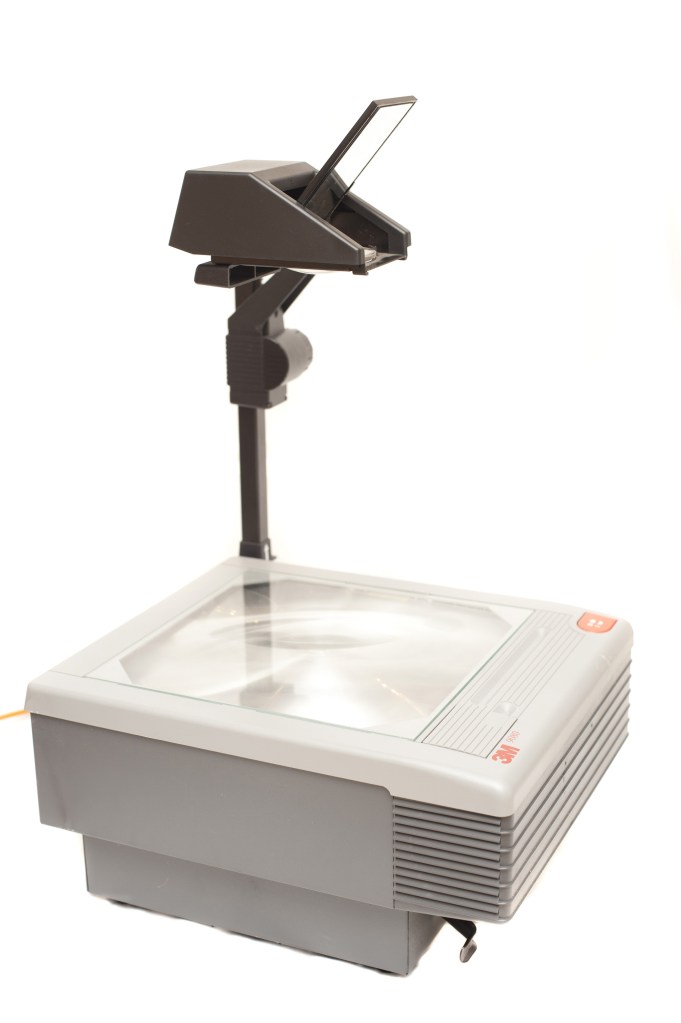
When, quite a few years ago, I started my first language teaching course, the tools available to us were limited compared to what is available to the language learner and teacher nowadays. I had to prepare my own OHP slides – something so old that most of you reading this won’t even know what I’m talking about. An overhead projector (OHP) is a device that uses light and a mirror to project an image from a horizontal plane to a vertical plane. We would draw pictures and diagrams to illustrate different elements of English grammar or vocabulary. I’ve added a picture below to illustrate this ancient device.
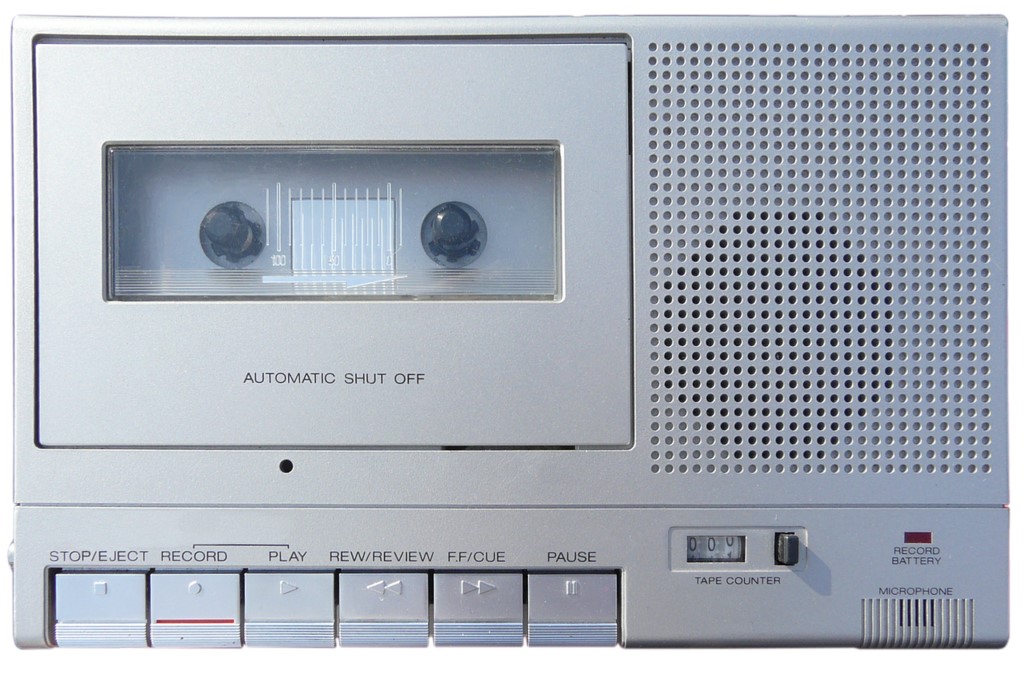
The other key piece of kit was a cassette player with a counter, so you could manually rewind a cassette to a specific point i.e. the start of a listening exercise. I’ll add a picture of a cassette player with a counter, so you can see what I’m talking about.
Today, the tools available to language teachers and, more importantly, to language learners are incomparable to the blackboards and cassette players of the late 20th century. If you are wanting to improve your foreign language skills, you can stream movies on Netflix, for example, with subtitles in your language or your target language. You could choose to download an app – free or paid – to practise your basic sentence structures and be tested and improve your skills at such activities. You can read a newspaper or listen to the radio from anywhere in the world on your smartphone or laptop. You can take a photo of text from a magazine article or from a label on a jar of food and ask your phone to translate that text. As a result of speaking near my phone about AI and also about the English language, I have been recently inundated with advertisements for ‘learning English with AI’ on my Instagram feed, so we can use AI to help us learn our target language too.
I love sharing all of these possibilities with my clients as they are, undoubtedly, useful in helping us improve our language skills but the ultimate test is being able to converse in your target language with real human speakers of that language who are invariably not speaking completely clearly with a standard accent and who are not speaking in full grammatical sentences. Thanks to the wonderful individual nature of us humans, I would argue that the need for a real language trainer remains for those who are serious about improving their foreign language communication skills, for now…

